Wuthering Waves Mobile: In-Depth Analysis of the Combat System and Team Building
Wuthering Waves Mobile is positioned as a complex action RPG that places mechanical skill, tactical thinking, and character synergy at the centre of gameplay. Unlike many mobile titles that simplify combat for accessibility, this game demands precision, timing, and a solid understanding of its underlying systems. As of 2025, the mobile version retains the depth of its core mechanics while adapting controls and pacing for touch-based play.
Core Combat Mechanics in Wuthering Waves Mobile
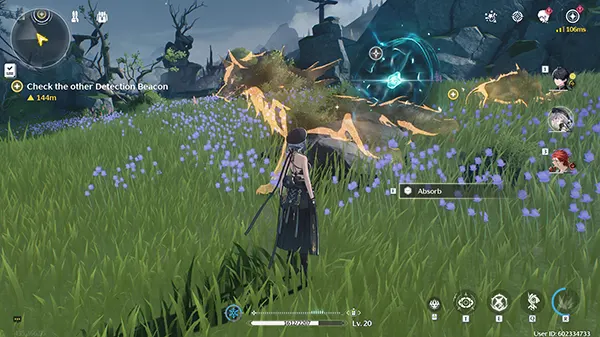
The combat system is built around real-time action with a strong emphasis on player input. Attacks are not automated, and success depends on manual dodging, well-timed counterattacks, and efficient skill usage. Each character features a distinct attack cadence, stamina consumption pattern, and animation commitment, which directly affects positioning and survivability during encounters.
A key element is the Dodge Counter mechanic. Perfectly timed evasions trigger enhanced counterattacks that deal increased damage or apply additional effects. On mobile devices, this system has been carefully optimised with generous input buffering, ensuring responsiveness without lowering the skill ceiling. Players who master dodge timing gain a clear advantage in both boss fights and high-difficulty content.
Another defining feature is the Resonance Skill and Resonance Liberation system. Skills recharge independently and encourage rotational play rather than spamming a single ability. Energy management becomes essential, particularly in longer encounters where inefficient rotations can leave the team exposed during enemy burst phases.
Enemy Behaviour and Encounter Design
Enemies in Wuthering Waves Mobile are designed to punish predictable play. Many foes adapt their attack patterns based on player distance, current animation states, or repeated actions. This creates a dynamic combat flow where positioning and awareness are as important as raw damage output.
Elite enemies and bosses frequently feature layered mechanics such as shield phases, delayed area attacks, and conditional vulnerabilities. These mechanics force players to adjust their approach mid-fight rather than relying on memorised patterns. On mobile, visual telegraphs are clear and readable, which supports fair reaction-based gameplay.
Environmental factors also play a role in encounters. Terrain elevation, narrow spaces, and interactive elements can influence movement and targeting. Understanding how to manipulate space allows players to control enemy positioning and reduce incoming damage, especially in solo or under-geared scenarios.
Character Roles and Team Composition Principles
Team building in Wuthering Waves Mobile revolves around defined character roles rather than generic damage stacking. Most teams are structured around a primary damage dealer, one or two enablers, and a flexible slot that adapts to content requirements. Ignoring role balance often results in unstable rotations and reduced overall efficiency.
Main damage dealers are designed to stay on the field for extended periods. Their kits usually reward sustained presence through stacking buffs, combo extensions, or scaling mechanics. These characters benefit most from consistent energy generation and external buffs provided by teammates.
Support and sub-damage characters operate primarily through quick swaps. Their value lies in applying debuffs, triggering off-field damage, or enhancing the main carry’s output. Proper swap timing is critical, as poorly executed rotations can interrupt attack chains or waste cooldown windows.
Synergy, Elements, and Resonance Effects
Elemental interactions in Wuthering Waves Mobile are subtle but impactful. Rather than relying on simple reaction multipliers, the system focuses on resonance effects that modify combat flow. These effects can alter enemy behaviour, enhance stagger potential, or provide temporary control advantages.
Synergy is determined not only by elements but also by animation speed and cooldown alignment. Characters with mismatched tempos can disrupt team rhythm, leading to downtime or overlapping buffs. Advanced players often prioritise rotation smoothness over theoretical damage calculations.
As of 2025, balance updates have expanded viable team archetypes, reducing reliance on a narrow meta. This allows for experimentation and personal preference, provided players understand how different kits interact within a rotation.
Progression Systems and Their Impact on Combat Efficiency
Character progression directly influences combat performance, but raw stat increases are only part of the equation. Weapon selection, skill investment, and passive unlocks often provide more meaningful improvements than level scaling alone. Players who invest strategically can outperform higher-level accounts with inefficient builds.
The Echo system is particularly influential. Echoes function as both stat modifiers and active abilities, adding another layer to combat decision-making. Choosing Echoes that complement a character’s role and rotation can significantly enhance survivability or burst potential.
Mobile-specific optimisation ensures that Echo activations and skill inputs remain responsive even during complex rotations. This maintains combat integrity and prevents progression systems from overwhelming mechanical play.
Long-Term Team Development and Endgame Viability
Endgame content places strict demands on team cohesion and execution. Damage checks are often combined with survival challenges, requiring balanced investment across all team members. Over-investing in a single character frequently leads to weaknesses exposed by sustained encounters.
Resource management becomes increasingly important at higher levels. Upgrade materials are limited, encouraging players to commit to a core roster rather than spreading investment too thin. This design supports long-term planning and reduces the impact of short-term balance shifts.
By 2025, Wuthering Waves Mobile has established a stable endgame structure that rewards mastery rather than brute force. Players who understand combat mechanics, team synergy, and progression priorities consistently achieve better results across all modes.