
Project Mugen Mobile: Will It Set a New Standard for Anime Open-City Action Games?
The announcement of Project Mugen Mobile immediately drew comparisons with leading open-world titles, yet its direction is notably different. Instead of vast natural landscapes, the game focuses on a dense urban environment inspired by modern anime aesthetics. As of 2026, mobile hardware has reached a level where ambitious projects like this are no longer experimental but increasingly viable. The question is not whether such a game can run on smartphones, but whether it can redefine expectations for the genre itself.
Urban Design and World Interaction in Project Mugen
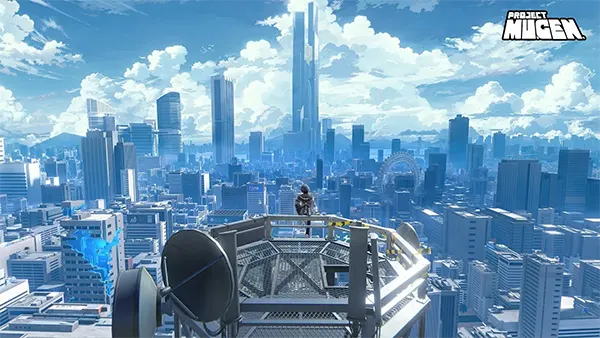
Unlike traditional open-world games that prioritise scale, Project Mugen appears to focus on density. Early footage and developer insights suggest a city filled with vertical exploration, interactive environments, and dynamic events. This approach aligns with trends seen in modern console titles but remains relatively rare on mobile devices due to technical limitations.
The emphasis on verticality is particularly notable. Characters are shown traversing rooftops, using grappling mechanics, and interacting with infrastructure such as trains and street-level systems. This creates a layered experience where movement is not confined to ground-level exploration, making the city feel more alive and functional.
Another important aspect is environmental interactivity. Objects, NPC behaviour, and dynamic events contribute to immersion. Instead of static backgrounds, the city reacts to player actions, suggesting a shift towards systemic gameplay rather than scripted sequences.
How City-Based Gameplay Changes Player Expectations
Urban-focused design introduces different expectations compared to traditional open-world formats. Players begin to look for realism in systems such as traffic flow, pedestrian behaviour, and day-night cycles. These elements are no longer cosmetic but influence gameplay decisions and mission outcomes.
Mobility also becomes central. In a city environment, fast and flexible movement systems are essential. Project Mugen’s approach suggests that traversal mechanics may become as important as combat, shaping how future titles are designed on mobile.
Finally, the sense of scale shifts from horizontal to vertical complexity. Instead of larger maps, developers may prioritise richer environments within smaller spaces, offering more meaningful interaction per square metre.
Combat Systems and Character Design Evolution
Project Mugen integrates anime-style combat with real-time action mechanics, which places it closer to hybrid genres combining RPG elements with action gameplay. This is significant because mobile titles have traditionally relied on simplified combat systems to accommodate touchscreen controls.
The game appears to incorporate combo-based mechanics, character switching, and skill-based interactions. These systems demand precision and responsiveness, suggesting that control optimisation will play a crucial role in its success. Developers are increasingly experimenting with gesture-based inputs and adaptive UI to maintain complexity without sacrificing usability.
Character design also reflects a shift towards individuality and narrative integration. Instead of generic avatars, each character seems to have distinct abilities tied to both combat and exploration, reinforcing the idea that gameplay systems are interconnected.
Balancing Depth and Accessibility on Mobile Devices
One of the main challenges for games like Project Mugen is balancing depth with accessibility. Complex mechanics can alienate casual players if not properly introduced, especially on mobile platforms where session times are often shorter.
Developers must design systems that are easy to learn but difficult to master. This includes layered tutorials, progressive skill unlocking, and adaptive difficulty. The goal is to provide immediate engagement while allowing long-term skill development.
Hardware variability also plays a role. Not all users have access to high-end devices, so optimisation becomes essential. Scalable graphics settings and performance modes are likely to be standard features if the game aims for a broad audience.
Technical Performance and Industry Impact by 2026
By 2026, mobile processors and GPUs have significantly improved, enabling more complex simulations and higher fidelity visuals. Project Mugen benefits from these advancements, but it also pushes the limits of what is currently achievable on mainstream devices.
Real-time lighting, physics interactions, and large numbers of active NPCs require careful optimisation. Developers must balance visual quality with battery consumption and thermal performance, which remain critical constraints for mobile gaming.
Cloud integration and hybrid processing models may also influence performance. Some aspects of the game could rely on server-side computation, allowing more complex systems without overloading the device itself.
Will Project Mugen Influence Future Mobile Game Development?
If successful, Project Mugen could redefine expectations for mobile anime action games. Developers may shift towards more ambitious projects, focusing on systemic gameplay and deeper interaction rather than incremental visual upgrades.
The industry could also see increased investment in open-city environments, as opposed to traditional open-world landscapes. This would align mobile gaming more closely with trends seen on PC and console platforms.
However, success is not guaranteed. Performance stability, monetisation models, and long-term content support will ultimately determine whether Project Mugen becomes a reference point or remains an isolated experiment.